The single mistake first-timers make is treating the UK as one city with a few day trips attached. It isn’t. London to Edinburgh is roughly the same distance as Paris to Marseille, and the train takes over four hours. The second mistake follows from the first: trying to see England, Scotland and Wales in five days. You can’t, and you’ll spend the whole trip in transit. So here’s a ranked shortlist of the top tourist attractions in the UK for first timers, with a one-line reason for each, plus honest notes on what needs booking and what you can safely skip.
The ranked shortlist, and what each one actually gives you
1. The Tower of London. Almost a thousand years of continuous use, from fortress to prison to execution site to armoury. The Crown Jewels are the headline, but the Yeoman Warder tours are the real value. Book a timed ticket two to three weeks ahead in summer; walk-up queues can hit ninety minutes by mid-morning.
2. The British Museum. Free entry, and the single best introduction to world civilisations you’ll find anywhere. The Rosetta Stone, the Parthenon sculptures, the Sutton Hoo helmet. It’s enormous, so pick two wings and accept you won’t see the rest. No booking needed for general entry, though special exhibitions sell out weeks in advance.
3. Edinburgh Castle. Sits on a volcanic plug above the city and delivers the kind of view that makes the whole trip feel worth it. The one o’clock gun still fires. Buy tickets online; the gate queue is brutal in August during the Festival.
4. The Roman Baths in Bath. The best-preserved Roman religious site in northern Europe, and the thermal water still steams. The audio guide is genuinely good, not an afterthought. Book ahead for weekends year-round.
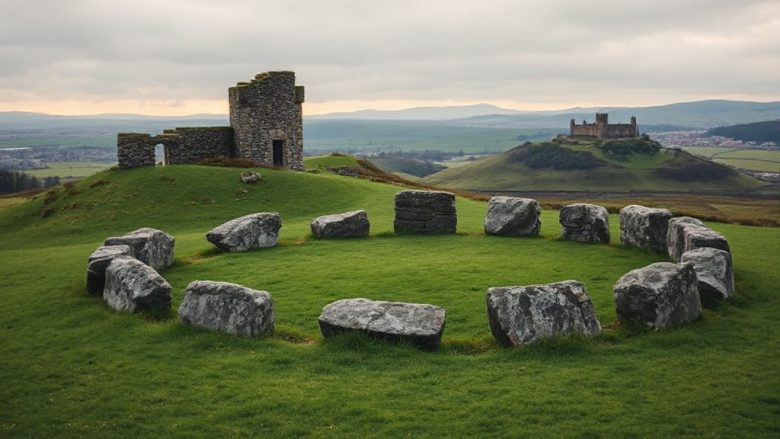
5. Stonehenge. Divisive, and I’ll be honest about why. The stones themselves are roped off and smaller than photos suggest. What makes it work is the surrounding landscape, the burial mounds, the cursus, the sheer effort of moving those sarsens. Go early or late, not midday. Timed entry is mandatory and sells out on solstice dates.
6. The Lake District. Not a single attraction but a whole region, and the reason is simple: it’s the most compact concentration of genuinely dramatic scenery in England. Windermere gets crowded; Buttermere and Wasdale don’t. You need a car or patience with buses.
7. York Minster and the Shambles. York packs two thousand years into a walkable centre. The Minster’s stained glass is the finest in the country, and the Shambles is a medieval street that hasn’t been ruined. Book Minster tower climbs separately; they’re narrow and sell out.
8. Snowdonia, now Eryri. If you want mountains without Scotland’s travel time, this is it. Snowdon itself has a train to the summit, which feels like cheating but works if you’re short on time. Book the train months ahead.
9. The Giant’s Causeway. Forty thousand basalt columns on the Antrim coast, and the geology is genuinely strange. It’s in Northern Ireland, so it needs a separate ferry or flight, which is why it sits lower on a first-trip list. Combine it with Belfast if you go.
10. The Cotswolds. Honey-stone villages, low hills, and the England people picture before they arrive. Castle Combe and Bibury are the postcard shots. It’s best by car, and the villages are real communities, not sets, so keep your voice down and don’t park on verges.
What to book ahead, and what’s overrated on a first visit
Anything with a timed entry in London needs booking: the Tower, Westminster Abbey, the Churchill War Rooms, the London Eye. Same for Edinburgh Castle, the Roman Baths, Stonehenge and the Snowdon mountain railway. The pattern is consistent: if it has a fixed capacity and a famous name, book it. Free museums with no timed entry, like the British Museum, the National Gallery and the Natural History Museum, you can walk into, though you’ll queue at peak times.
Now the overrated list, and I’ll take the hit for this. Madame Tussauds is expensive and not distinctively British. The London Eye gives you a view you can get free from Parliament Hill or the Sky Garden, though the Sky Garden also needs booking. Buckingham Palace’s Changing of the Guard is a crush of phones and elbows; the palace itself is only open for a short summer window and is genuinely worth it, but the ceremony isn’t. Stonehenge, as noted, is a coin flip. And Oxford Street is just shops you have at home.
One more thing first-timers get wrong: they treat the UK as a museum. It isn’t. Pubs, markets, coastal paths and ordinary high streets are often the parts people remember. Leave half a day unplanned in each place and let it happen.
How to group these by region without losing your holiday to trains
The UK is small on a map and slow on the ground. The practical groupings are these.
London plus one. Five days in London, then one day trip. Bath is the best single day trip: ninety minutes by train, Roman baths, Georgian architecture, decent food. Oxford and Cambridge are fine but feel like London with older buildings. Canterbury is underrated. Don’t attempt Stonehenge as a day trip from London unless you’re on an organised tour, because the last mile has no public transport.
The northern run. London to York by train is under two hours. York to Edinburgh is two and a half. That’s a natural three-stop trip: two nights York, three nights Edinburgh, and you’ve covered Roman, medieval, Georgian and Scottish in one line. Add a day in Durham if you have it, because the cathedral is one of the best in Europe and almost nobody plans for it.
The west and Wales. Bath, the Cotswolds and Snowdonia chain together by car in about a week. Trains exist but are slow and infrequent outside the main lines. If you don’t drive, pick two of the three, not all three.
Scotland beyond Edinburgh. The Highlands and Skye need at least four days and a car. Don’t bolt them onto a three-day Edinburgh stay. You’ll see the inside of a bus and nothing else.
Northern Ireland. Treat it as its own trip. Belfast has the Titanic museum, which is better than it sounds, and the Antrim coast is a full day from there. Two nights minimum.
The honest summary: pick one region, go deep, and accept that you’ll come back. Everyone does. The top tourist attractions in the UK for first timers aren’t a checklist to clear; they’re a reason to return. Book the timed ones early, skip the queues that aren’t worth it, and leave room for the unplanned afternoon that turns out to be the best part of the trip.