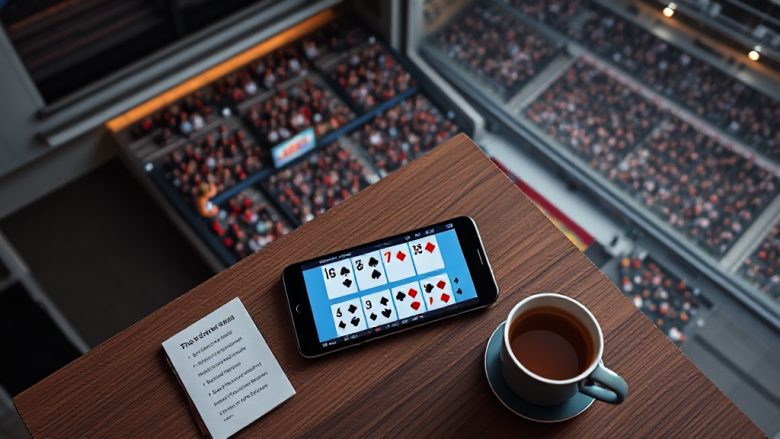
First Time Play Rummy Game: 40 Minutes to Your First Clean Win
You have opened a rummy table on your phone, you can see thirteen cards in your hand, and you are not entirely sure whether the card you are about to pick is a good idea. That hesitation is normal, and it is exactly what this page is built to remove. If you set aside roughly forty minutes and follow the sequence below, you will finish your first session knowing how to arrange a hand, when to discard, and how to declare without the panic of a misclick. Treat me as the consultant sitting beside you: I will tell you what to do, what to avoid, and where cautious players usually go wrong on day one.
The short answer, before any of the detail: your first game should be played on the smallest table available, with the lowest entry you can find, using a single fixed rule for what you pick up and a single fixed rule for what you throw away. That is it. Everything else — melds, sequences, jokers, declarations — is learned faster when the stakes are trivial and your decisions are boring. A useful place to start is the curated tools and app listings at First Time Play Rummy Game, where you can compare platforms before committing to one. Once you have a table open, the rest of this piece is your script.
What You Actually Need Before the First Card Is Dealt
Beginners lose time, not money, in the first ten minutes. They download an app, get distracted by a pop-up, register twice, and then sit down at a table with no idea what the entry fee was. Avoid that by preparing four things in advance.
First, choose one platform and stay on it for the whole session. Switching apps mid-learning resets your understanding of the interface, and every rummy client arranges its buttons slightly differently. Second, set a hard session limit in your head — for a first attempt, three games is plenty. Third, decide your entry level before you see the lobby, because lobbies are designed to make the middle option look reasonable. Fourth, make sure your connection is stable; a dropped frame during a declaration is the single most frustrating way to lose a hand you had already won.
You do not need to memorise the full rulebook. Indian rummy in its common 13-card form has a small number of moving parts: you draw, you discard, you build sets and sequences, and you declare when your hand is valid. Points are counted against you for cards you cannot meld, and a valid declaration usually ends the hand. Learn those five facts and you can play.
One caution before you deposit anything: check whether the platform is legal and licensed in your region, and read the withdrawal terms rather than the deposit terms. Deposits are always easy. The conditions that matter are the ones attached to taking money out, and reading them on day one prevents a nasty surprise on day thirty.
The First Ten Minutes: Reading the Table Without Touching Anything
Here is a habit that separates calm beginners from flustered ones. On your first hand, play it slowly on purpose. Do not try to win. Try to observe.
Watch the discard pile. In rummy, the discard pile is a public diary of what your opponents do not want. If a player repeatedly throws away cards of one suit, that suit is probably not helping them, which means it may still be available to you. If someone picks from the discard pile and then discards a card of the same rank, they are likely collecting a set and just upgraded it. You will not read all of this on hand one, but you should start looking.
Watch your own hand for structure rather than for individual cards. Sort it by suit, then by rank within each suit. Almost every beginner mistake comes from seeing thirteen separate cards instead of three or four potential groups. A hand of 4-5-6 of hearts is not three cards; it is one completed sequence and ten cards of work remaining.
Watch the timer. Most clients give you a countdown for each turn, and beginners burn it down to the last second because they are still sorting. Sorting should take two seconds once you are used to it. If you find yourself staring, you have already lost the thread — pick from the closed pile and discard your least useful card. A quick, mediocre decision beats a slow, frozen one.
Finally, note the joker. Every variant treats jokers slightly differently, and the wild joker for the hand is usually displayed in a corner of the screen. Beginners who ignore that corner spend the whole hand building a sequence that a joker would have completed in one move.
Your First Real Hand: A Fixed Routine You Can Repeat
Now the actual play. Use the same routine every turn until it becomes automatic.
Step one: assess before you draw. Look at your thirteen cards and ask one question — which group is closest to completion? A pair that needs one more card is closer than three scattered cards that need two. Aim your whole hand at the fastest route to a valid declaration, not the most beautiful one.
Step two: decide your draw source. If the top card of the discard pile completes or nearly completes a group, take it. If it does not, take from the closed pile. Do not take a card because it looks interesting; take it because it has a job in your hand. This single rule prevents more beginner losses than any other.
Step three: discard with a reason. Throw the card that is furthest from any group, and prefer to throw a high-value card over a low-value one when the usefulness is equal. High cards hurt more when the hand ends badly, so getting rid of them early is a quiet form of insurance.
Step four: never break a completed group. Once you have a valid sequence, it stays. Beginners sometimes dismantle a finished run to chase a bigger one and end up with nothing. A valid hand that declares is worth more than a spectacular hand that does not.
Repeat that four-step loop and you will play a competent first game. Competence, not brilliance, is the goal on day one.
Melds, Sequences and Jokers Explained Without Jargon
A set is three or four cards of the same rank in different suits — three kings, for example. A sequence is three or more consecutive cards of the same suit, such as 7-8-9 of spades. In the standard 13-card game you generally need at least two sequences, and at least one of them must be a pure sequence with no joker substituting for a card. That pure-sequence requirement is the rule beginners forget, and it is the reason a hand that looks complete gets rejected at declaration.
Jokers come in two flavours. A printed joker is a designated card that can stand in for any card you need. A wild joker is a card of a rank chosen at the start of the hand, and it can also substitute. Both are useful, but neither can make a pure sequence. If your only sequence uses a joker, your declaration is invalid no matter how tidy the hand looks.
Points work against you. Cards you have not melded are counted, with face cards and aces typically costing more than number cards. This is why experienced players shed high cards early and why a hand that ends with a pile of unmelded court cards is expensive. You do not need to memorise a full points table on day one, but you should internalise the direction of travel: unmelded high cards are bad, completed groups are good.
Validation is the last hurdle. Before you declare, most clients show a confirmation step. Read it. If the game tells you a pure sequence is missing, do not confirm — go back and fix the hand. Confirming an invalid declaration is usually penalised, and it is the most avoidable mistake a first-timer can make.
Where Beginners Lose, and How to Avoid Each Trap
The traps below account for most first-session losses. Each one has a simple countermeasure.
Chasing a single card. You decide you need the nine of clubs, and you spend six turns waiting for it while your hand stagnates. Countermeasure: if a card has not arrived within three draws, abandon that plan and rebuild around what you actually hold.
Ignoring the pure sequence. You build two beautiful joker-assisted runs and discover at declaration that neither counts as pure. Countermeasure: secure one clean, joker-free sequence early, even if it is low-value. It is your foundation.
Playing above your comfort level. A first-timer at a high-stakes table will make rushed decisions because the timer feels heavier. Countermeasure: play the smallest table available for your first ten games. Skill grows faster when errors are cheap.
Not knowing the exit. Beginners often do not realise they can leave a table or fold a hopeless hand. Countermeasure: learn the drop and fold options before your first hand, so you always have a way out.
Playing tired. Rummy rewards attention. A session after a long day produces careless discards and missed reads. Countermeasure: cap your session at three games and stop while you are still sharp.
If you want a second opinion on which apps handle these mechanics cleanly, the directory at First Time Play Rummy Game groups tools and platforms by category, which makes comparison far quicker than downloading five apps at random.
After the First Session: Building a Repeatable Practice Loop
Your first game is not the destination; it is the baseline. What you do in the next week determines whether you become a competent player or stay a lucky one.
Review one hand after each session. Not the whole session — one hand. Ask three questions: where did I lose tempo, which discard did I regret, and did I have a pure sequence in time? Writing the answers down, even in a notes app, accelerates learning more than playing an extra ten games without reflection.
Then add one new skill per week. Week one, practise reading the discard pile. Week two, practise shedding high cards early. Week three, practise building two sequences in parallel rather than one at a time. Layering skills this way keeps the game interesting without overwhelming you.
Finally, keep your limits explicit. Decide before each session how many games you will play and stop when you reach that number, win or lose. The players who enjoy rummy for years are the ones who treated it as a game to learn rather than a hole to climb out of. You started today with thirteen cards and a lot of uncertainty. Forty minutes from now, you will have a routine, a rule for discarding, and a clear idea of what a valid declaration looks like. That is a genuinely good first day.
Frequently Asked Questions
How long does it take to learn rummy for the first time?
You can play a competent first hand within about forty minutes if you follow a fixed routine: assess, draw with a reason, discard with a reason, and never break a completed group. Mastery takes longer, but the basics are genuinely quick.
Do I need a pure sequence to declare on my first game?
Yes, in the standard 13-card format you generally need at least one pure sequence — a run of consecutive same-suit cards with no joker substituting. Secure that first, then build the rest of your hand around it.
Should a beginner pick from the discard pile or the closed pile?
Take from the discard pile only when the visible card completes or nearly completes a group in your hand. Otherwise draw from the closed pile. This single rule prevents most beginner losses.
What is the biggest mistake first-time rummy players make?
Chasing one specific card for too many turns while the rest of the hand stalls. If a card has not arrived in three draws, abandon that plan and rebuild around the cards you actually hold.
How many games should I play in my first session?
Three games at the smallest available table is a sensible first session. Cap it there, review one hand afterwards, and add a new skill the following week rather than trying to learn everything at once.